|
|
Diaporama
Saint-Martial was the center of an archiprêtré who was
transferred at Sumène at the end of the XVIIth century.
The first time we have a historical mention of the
church is in 1156. But the actual nave is dated from the
XIth or XIIth century. The arched recess and the great
three groined vault transept (bays and the 2 chapels)
appears more tardively.
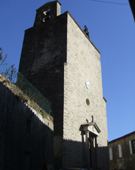
Build on a rocky spur, the building was fortified during
the Hundred Years War, the bell-tower, is a military
work and dating of this time.
During the centuries, the church sustained throughout
the time, several changes : construction of the gallery
at 17 th century, enhancement in the 18 th, recently the
chruch was cleared of surface soil and the stone striped
bare.
The special feature of this roman church is that it was
built with the stones of the country : the schist, which
is specially difficult to work because of his
friability. Because of the bearness and the stone which
was used this church is of a beautiful style.
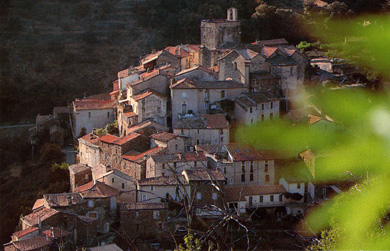
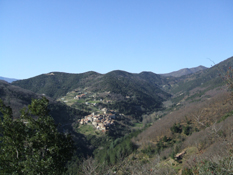
Today, Saint-Martial, between chestnut forest and
terraced onions fields, is a small township unusual and
picturesque landlocked in the Rieutord's valley,
carcterised by a strong catholic identity in the
huguenot cévenne's land.
St.Martial is nowdays known for the terraced sweet
onions fields, now labelised "Oignons Doux des
Cévennes", cultivated here as well as in whole Valley of
the Rieutord; for his textile craft via a fabric working
cashmere wool.
St. Martial is a protected site, and in a process of
being classified 'village de caractère'.
|